LinguaPal - AI Language Tutor
- 4.1
- Rating
- 10.00M
- Installs
- Free
- Price
 Analysis by App-foxy
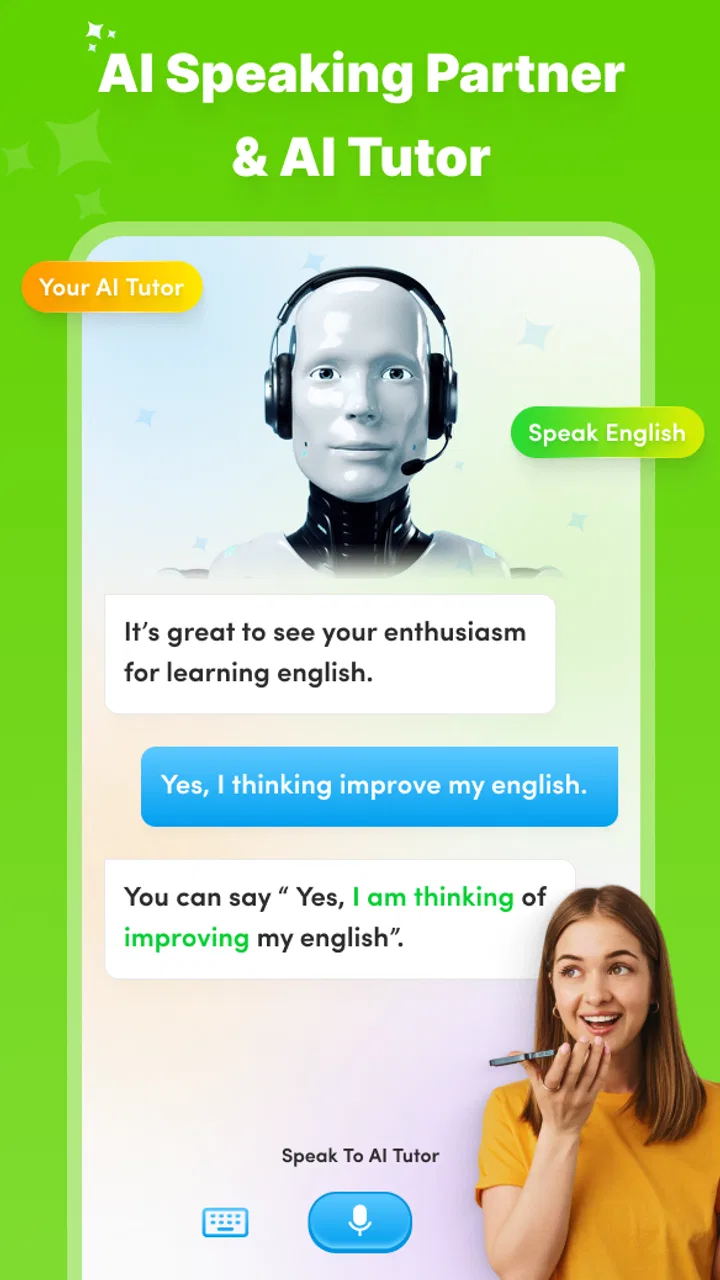
I approached LinguaPal - AI Language Tutor as a practical English-learning app rather than a complete language course. Its focus is clear: speaking practice, lessons, and vocabulary building in one mobile experience. That makes it appealing if I want a quick study session without opening several different tools. It is free to install, aimed at Everyone, and comes from Applications Arenagarage, so it is easy to try before deciding whether it deserves a regular place in my routine.
My overall impression is mixed but useful. LinguaPal can be a convenient starting point for learners who need encouragement to speak more often, especially when a tutor or conversation partner is not available. At the same time, its average rating of 3.0 from around 4,600 ratings suggests that the experience is not equally satisfying for everyone. I would not treat it as a replacement for a structured course, a patient human teacher, or a specialist pronunciation platform. I would consider it a low-commitment practice companion whose value depends heavily on how consistently I use it.
How I Would Decide Whether LinguaPal Fits
I would judge LinguaPal by whether it still helps after the first burst of curiosity, not by how engaging one session feels. I’d give it a small, repeatable role—such as practising phrases before a real conversation—and notice whether I return without having to rebuild my motivation each time. That makes it easier to decide what kind of routine could realistically last.
You May Also Like

 Pandora - Music & Podcasts
Pandora’s Music Is Easy to Start, but Harder to Recover
Pandora’s strength is its low-effort path from a seed to a station. Its weak spot is how much confidence it asks you to place in connection, setup, and quiet recovery.

 AccuWeather: Weather Radar
AccuWeather Review: A Quick, Clear Forecast for Everyday Decisions
For everyday plans, the best forecast is the one you can understand quickly. AccuWeather makes rain timing, radar, and local conditions easy to act on, with a few trade-offs.

 Hill Climb Racing
Why Hill Climb Racing Still Turns Crashes Into One More Run
A tiny car, a bumpy hill and one more upgrade: Hill Climb Racing keeps resurfacing because its simple chaos makes every near-miss feel personal.

 AliExpress - Shopping App
AliExpress Makes Global Shopping Feel Personal, but Shoppers Bear the Risk
AliExpress turns a global marketplace into a pocket-sized discovery engine. Its reach is useful, its shopping loop compelling, and its trade-offs easy to miss.

 Lords Mobile: Kingdom Wars
Lords Mobile Is a Kingdom-Building Routine, Not a Quick Match
A case-by-case verdict on the building, battles, device demands, and social commitments that make Lords Mobile rewarding for some players and exhausting for others.

 PDF Scanner app - TapScanner
TapScanner Makes Paperwork Easier to Capture, Check, and Share
TapScanner makes scanning with a phone feel less like a rescue operation and more like a dependable step in getting work done. Its capture tools are useful, though not flawless.
More From Our News Desk
View All News


Start with the learning problem, not the download button
Before choosing any English app, I ask what I actually need to improve. If my main problem is remembering everyday words, a vocabulary-focused tool may be enough. If I understand written English but freeze when speaking, conversation practice matters more. If I need help with grammar for school or work, a lesson-based course is usually a better foundation. LinguaPal sits between these needs by combining lessons, vocabulary work, and speaking practice.
That combination is useful for someone who wants variety in a short session. I can imagine opening it during a commute, before a trip, or after work when I have enough energy for practice but not for a long textbook chapter. The important trade-off is depth. A broad app can help me maintain momentum, but it may not provide the same detailed correction or progression as a tool designed around one narrow skill.
I would also consider my current level. A beginner may appreciate having vocabulary and speaking activities together, while a more advanced learner may find the material less demanding if they already communicate comfortably. The app is most convincing for learners who know basic English and want a regular push to use it aloud. Someone preparing for a formal exam should judge it more cautiously, because exam preparation requires a syllabus, targeted exercises, and measurable coverage.
What I would check during the first few sessions
My first test would be simple: can I complete a short lesson without feeling lost, and does the speaking element make me produce language rather than merely recognize it? I would pay attention to whether the vocabulary appears in useful situations, whether the lesson flow feels coherent, and whether I can return to difficult material easily. These details matter more than the presence of a long feature list.
I would avoid judging the app after one enthusiastic session. Language apps often feel effective at first because the tasks are fresh. The better test is whether I can build a repeatable routine. For example, I might use one session to learn words, another to speak them in context, and a third to revisit the expressions I struggled to remember. If LinguaPal supports that kind of rhythm naturally, it becomes more valuable than a tool I only open when I feel motivated.
A useful personal rule is to speak before looking at a translation or answer whenever possible. That turns passive recognition into active recall. I would also keep a small note of words I repeatedly miss and use them in my own sentences outside the app. This is one of the less obvious ways to get more from a combined lesson-and-vocabulary design: the app supplies prompts, but I create the personal context that makes those prompts memorable.
Where the app wins for everyday speaking practice
The strongest reason to choose LinguaPal is convenience. Speaking is often the skill learners postpone because it feels awkward to practise alone. A mobile tutor can lower that barrier. I do not need to arrange a class or wait for a conversation partner; I can begin with a short exercise when I have a few spare minutes. For a learner who understands English but rarely says anything aloud, that accessibility may be more important than advanced course structure.
I also like the idea of combining vocabulary with speaking instead of studying word lists in isolation. A word is easier to remember when I immediately try to use it in a sentence. Even if my first attempt is imperfect, the act of retrieving it under pressure is closer to real conversation than simply tapping a familiar answer. This makes the app particularly suitable for travel preparation, casual workplace communication, or building confidence before joining an English-speaking group.
Another advantage is the low financial barrier. The app is free, although optional in-app purchases range from $3.99 to $19.99 per item. I can therefore explore the basic experience before spending anything. That matters for learners who are unsure whether they prefer speaking exercises over flashcards, videos, or live instruction. I would use the free access as a trial period and only consider a purchase after confirming that the lessons fit my level and routine.
Its broad reach also gives me some confidence that it is not an abandoned experiment. LinguaPal has passed five million installs, and the current version is 6.2. Those figures do not guarantee a smooth experience, but they indicate that many people have at least tried it. I would still weigh that reach against the middling rating rather than assuming popularity equals quality.
Three practical ways I would use it beyond casual tapping
First, I would create a “before the situation” routine. If I had a meeting with international colleagues, I would practise vocabulary connected with introductions, schedules, clarification, and polite disagreement. I would then say several original sentences aloud instead of stopping after the lesson. This turns a general English session into preparation for a real event.
Second, I would use speaking practice as a confidence check rather than chasing perfect answers. I would repeat a difficult phrase once slowly, once at a natural pace, and once inside a longer sentence. That three-step approach helps reveal whether I actually know the phrase or only recognize it on screen. It also makes short sessions feel purposeful, even when I have little time.
Third, I would separate learning from reviewing. New vocabulary is exciting, but forgotten vocabulary is where progress is decided. After a session, I would select a small handful of words that caused hesitation and revisit them the next day. If I only move forward through fresh lessons, I may mistake familiarity for retention. LinguaPal works better as part of a cycle: learn, speak, recall, and reuse.
Where another type of app may be the better choice
I would choose a structured course over LinguaPal if I needed a carefully sequenced path from beginner level onward. A dedicated course may offer clearer grammar progression, longer units, and a stronger sense of what to study next. LinguaPal’s mixed focus is convenient, but learners who become frustrated by uncertainty may prefer a program organized like a classroom syllabus.
I would choose a flashcard app if vocabulary retention were my only priority. Flashcards are often better when I want to control word lists, schedule reviews, or study terminology for a specific profession. LinguaPal’s broader approach may feel more natural, but it may not replace a highly customizable memorization system for someone preparing a technical vocabulary set.
I would choose live tutoring or a conversation exchange if my main goal were spontaneous interaction. A human can react to my meaning, ask unexpected follow-up questions, and explain why a phrase sounds unnatural in context. An app is less intimidating and more available, but it cannot fully recreate the pressure and flexibility of a real conversation. For serious speaking improvement, I would use LinguaPal as preparation between live sessions rather than as the only practice.
I would also look elsewhere if pronunciation accuracy were my central concern. Speaking practice is valuable, but pronunciation learning benefits from precise feedback, focused repetition, and sometimes a specialist tool. If I were repeatedly misunderstood, I would want an option built specifically around sound-level correction rather than assuming general speaking activities would solve the problem.
The friction I would expect before making it a habit
The rating of 3.0 is the clearest warning sign. With around 30 written reviews, the written feedback pool is smaller than the broader rating count, so I would not draw a precise conclusion about every user’s experience. Still, the average indicates that convenience alone has not produced universal satisfaction. I would pay close attention to stability, lesson quality, and how well the speaking activities match my expectations during the trial period.
There is also a possible value question around the paid items. The free entry point is helpful, but optional purchases can make it harder to know whether I am evaluating the complete learning path or only an introductory portion. I would avoid paying immediately. Instead, I would first establish a routine, identify the exact limitation I want to remove, and then decide whether the relevant purchase solves that problem.
Another limitation is that an app cannot know my real communication goals unless I actively adapt the material. Generic vocabulary may be useful, but it will not automatically prepare me for nursing, engineering, customer support, academic writing, or a job interview. My workaround would be to connect each lesson to a personal example. If I cannot do that, the session may remain a short game-like activity rather than becoming usable language.
Device compatibility is straightforward for many users: the app requires Android 8.0 or later. I would check that before planning a study routine on an older phone. For supported devices, the technical requirement is modest, but compatibility is still worth confirming when the app is intended for daily use rather than occasional browsing.
The real cost of switching from another learning method
Moving to LinguaPal is easiest when I am starting from zero or when my existing method has already become stale. I can begin with short speaking sessions and add vocabulary practice without rebuilding an elaborate study system. The transition is less simple if I already have carefully organized flashcards, a teacher’s curriculum, or a long-running course. In that case, switching may create duplicated work rather than progress.
I would not delete another resource immediately. For two weeks, I would use LinguaPal as the speaking layer while keeping my existing grammar or review system. This approach reveals whether the app fills a genuine gap. If it helps me speak words I previously only recognized, it has a clear role. If it merely repeats material I already know, I would keep the older tool and use LinguaPal only occasionally.
The same principle applies to paid content. I would treat a purchase as worthwhile only if it saves time, improves consistency, or gives me practice I cannot get elsewhere. A cheaper app is not automatically better if I never open it, and a free app is not truly economical if it leaves my main weakness untouched. The right comparison is not simply price; it is the amount of useful practice I complete each week.
For families, the Everyone age rating makes the app broadly approachable, but I would still guide younger learners toward a clear routine rather than leaving them to tap randomly. For adults, the more important question is motivation. If I need accountability, scheduled classes or a teacher may be more effective. If I mainly need a private place to rehearse without embarrassment, LinguaPal has a stronger case.
My recommendation for different kinds of learners
I recommend trying LinguaPal if you want an accessible English-speaking companion, prefer short mobile sessions, and are willing to turn prompts into your own sentences. It is especially suitable for learners who have studied vocabulary before but need to activate it aloud. The free starting point makes experimentation sensible, and the combination of lessons, vocabulary, and speaking gives the app a practical identity rather than reducing it to a word list.
I would recommend it less strongly to advanced speakers, exam candidates, and learners who need detailed correction. Those users may gain more from a specialized course, live instruction, or a pronunciation-focused service. I would also hesitate if the app’s early lessons feel repetitive or if the paid structure becomes a distraction. A learning tool should make practice easier, not turn every session into a decision about what to unlock.
My preferred routine would be modest: a short lesson, deliberate speaking, and a next-day review of the words that caused trouble. I would use real-life topics to make the material relevant and keep another resource for grammar or specialized vocabulary when necessary. That combination respects LinguaPal’s strengths without asking it to do everything.
In the end, LinguaPal is best understood as a convenient practice bridge. It can help move English from the screen into my voice, which is a meaningful step for hesitant learners. It is not a universal solution, and the average rating encourages a careful trial rather than blind enthusiasm. If the speaking activities feel natural on my device and the free experience supports a repeatable routine, I would keep it. If I need a complete curriculum, expert feedback, or highly targeted progress, I would choose a more specialized alternative instead.
FAQs for LinguaPal - AI Language Tutor
01What is LinguaPal and how does it work?
LinguaPal is an AI-driven language learning app designed to facilitate easy and effective language acquisition. It uses advanced algorithms to personalize lessons based on user preferences and learning pace. By integrating interactive exercises, real-life conversational scenarios, and instant feedback, it aims to enhance vocabulary and grammar skills efficiently.
02Is LinguaPal suitable for beginners and advanced learners?
Yes, LinguaPal caters to all learning levels, from beginners to advanced speakers. The app adapts its content dynamically, offering beginner-friendly lessons and complex exercises for advanced learners. Users can choose their starting level and progress through increasingly challenging material at their own pace.
03What languages are available on LinguaPal?
LinguaPal offers a wide range of languages, including popular ones like Spanish, French, and Mandarin, as well as less commonly taught languages. The app continually updates its language offerings, ensuring users have access to a diverse and comprehensive language selection for learning.
04Does LinguaPal require an internet connection?
While some features of LinguaPal require an internet connection, such as live practice sessions and updates, the app also offers offline mode. This allows users to download lessons and practice materials for uninterrupted learning, making it convenient for travel or areas with limited connectivity.
05Are there any subscription fees for LinguaPal?
LinguaPal operates on a freemium model. It offers basic lessons for free, while premium subscriptions unlock advanced features, additional languages, and personalized tutoring. Users can opt for monthly or annual plans, often with a free trial period to explore premium offerings before committing.
Pros
- Interactive AI-driven lessons enhance learning.
- Wide variety of languages available to learn.
- User-friendly interface for seamless navigation.
- Progress tracking keeps learners motivated.
- Offline mode for learning without internet.
Cons
- Limited free content; subscription needed.
- Occasional AI errors in conversation practice.
- No live tutor sessions available.
- Requires a stable internet for full features.
- Voice recognition can be inconsistent.

LinguaPal - AI Language Tutor
Gallery